Many homeowners dry the visible water and assume the problem is over. Unfortunately, moisture hidden in walls and floors keeps working. So, how fast does mold grow after water damage? In many cases, it can begin within 24 to 48 hours.
Visible growth often follows within days, which is why speed matters so much. In this guide, we’ll walk through a stage-by-stage timeline, the conditions that speed growth, early warning signs, and when to call a professional.
At Desa Contracting & Restoration, we see the cost of delay every week. The sooner water is removed and structures are dried, the better your chances of avoiding mold altogether.
Mold can begin to grow within 24 to 48 hours after materials get wet. Visible growth often shows up within about 3 to 7 days, and it spreads more the longer moisture stays. In short, how long it takes for water damage to cause mold depends on how quickly you dry things out.
Timing also varies. Moisture level, temperature, and the materials involved all change the pace. As a result, treat these numbers as industry guidelines rather than exact promises. Even so, the safest approach is always to act within the first day.
Can mold grow in 24 hours? It can begin, although you usually won’t see it yet. That’s what makes the first day so important.
Water damage to mold typically follows a predictable path. Here’s what usually happens, and when.
Mold spores are already present in most indoor air. Once water arrives, they have moisture to land on. During this first day, porous materials like drywall, carpet, and wood absorb water quickly. Fortunately, this is the best window to stop mold before it starts.
This is the critical window. Mold growth in the first 24 to 48 hours can begin on damp surfaces, and by 72 hours it can take hold if moisture remains. You may not see anything yet. However, hidden growth is often underway behind walls and under flooring.
This is also why quick action matters. Our guide on how fast you should act after water damage explains what to do in these early hours.
How long does it take for mold to show after water damage? Often within a few days to a week. At this stage, you may notice spots, discoloration, or a musty smell. By now, the mold is established and harder to remove.
After a week of water damage, mold can spread across larger areas and begin breaking down materials. Drywall may soften, wood can weaken, and odors intensify. Consequently, repairs become bigger and more costly.
Not every material reacts the same way. Porous materials hold moisture longer, so they tend to support mold faster.
How long does it take for mold to grow on wet drywall? It can begin within a couple of days if the drywall stays damp. Mold on drywall after water damage often starts on the back side, where you can’t see it. Insulation behaves similarly, because it traps moisture.
Carpet and underlay soak up water and dry slowly. Mold in carpet after a flood can develop underneath long before you notice anything on top. Mold under flooring after water damage is also common, especially with laminate and engineered wood.
Mold behind walls after a leak is one of the most common hidden problems we find. Because you can’t see it, it can grow for weeks. Read our guide on hidden water damage in Toronto homes for warning signs you shouldn’t ignore.
How long does it take for mold to grow in a basement after a flood? Often just a few days. Basements are naturally damp, with limited airflow, so they dry slowly. Cooler temperatures slow mold somewhat, but moisture matters far more than temperature. That’s why mold can take hold quickly in basements, and why Toronto basement mold is such a common call for our team.
Desa Contracting & Restoration responds 24/7 across Toronto and the GTA.
Several conditions speed up mold after water damage. Understanding them helps you slow it down.
Humidity and mold growth go hand in hand. High indoor humidity keeps materials damp, and stagnant air stops them from drying. As a result, closed-up basements and wall cavities are especially vulnerable.
Mold grows across a wide range of temperatures, and typical indoor conditions suit it well. Warmer, damp spaces tend to speed things up, while cooler spaces slow growth without stopping it. Moisture is still the main driver.
Drywall, wood, carpet, and insulation all hold moisture. Standing water makes this worse, because materials keep absorbing it. Removing the water quickly is the first step.
The biggest factor is time. Every extra hour of moisture gives mold more opportunity. Our certified team uses extraction, air movers, dehumidifiers, and moisture meters as part of our water damage restoration services. Together, these steps dry materials to safe levels, so mold has less chance to take hold.
Early detection helps you act before the problem grows. Here’s what to watch for.
A persistent musty or earthy smell is often the first sign. If it lingers after cleanup, moisture may still be trapped.
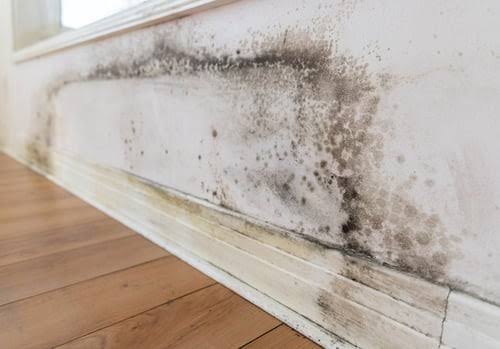
Look for dark, green, or white patches on walls, ceilings, and baseboards. Early mold growth can look like small spots or fuzzy patches. Keep in mind that color alone can’t tell you whether mold is toxic. Only testing can confirm the type.
Peeling paint, bubbling drywall, warped floors, and damp patches all suggest moisture is still present. Where there’s lingering moisture, mold may follow.
Is mold from water damage dangerous? It can be, especially for sensitive people. Common reactions include coughing, throat or eye irritation, and allergy-like symptoms. Children, older adults, and anyone with asthma or a weakened immune system may be more affected.
If anyone in your home has health concerns, speak with a doctor. For the mold itself, a professional assessment can tell you what you’re dealing with.
If you’re wondering how to stop mold after water damage, here’s the order that works best:
Keep in mind that fans alone rarely dry hidden moisture. That’s why professional moisture mapping makes such a difference.
A professional moisture assessment from Desa Contracting & Restoration shows what’s hiding behind the surface.
No. Fast, thorough drying usually prevents mold. How long a house can stay wet before mold grows depends on conditions, but the first 48 hours are key. When water is removed quickly and materials are dried to proper levels, mold often never develops.
In contrast, slow or incomplete drying is what turns a water problem into a mold problem. That difference is why prompt professional help pays off.
Some situations are too risky for DIY. Call a professional if:
Professional mold remediation in Toronto relies on containment, so spores don’t spread to clean areas. Learn more in our guide on the importance of proper containment during mold remediation. For testing, removal, and rebuilding, our mold remediation services cover the full process.
It depends on your policy and on the cause. Mold that follows a covered sudden event, such as a burst pipe, may be treated differently than mold caused by neglect or a long-term leak. Is mold covered after a burst pipe? Sometimes, but wording varies.
To protect a mold damage insurance claim in Ontario, document everything early. Photos, moisture readings, and professional reports all help. Because policies differ, review your wording or speak with your insurer before assuming coverage.
When water damage hits, speed and process matter. Desa Contracting & Restoration provides 24/7 emergency response across Toronto and the GTA. Our work includes:
Whether you need water damage restoration in Toronto or help with mold after water damage, our team is ready to respond.
Mold can begin growing within 24 to 48 hours after materials get wet. Visible growth often appears within about 3 to 7 days. Timing varies with moisture, temperature, and materials, so fast drying is the best protection.
Yes, mold can begin to grow within 24 hours in damp conditions, although it's usually not visible yet. Removing water and drying materials quickly greatly reduces the risk.
Mold can start on wet drywall within a couple of days if it stays damp. Growth often begins on the back side, so it may stay hidden until it spreads. Quick drying helps prevent it.
No. When water is removed quickly and materials are fully dried, usually within 48 hours, mold often doesn't develop. Slow or incomplete drying is what usually causes problems.
Call a professional if materials stayed wet over 48 hours, you see or smell mold, water reached walls or floors, or anyone has respiratory sensitivities. Professionals use containment and moisture testing to remove it safely.
Every day that moisture lingers, the risk of mold grows. Desa Contracting & Restoration provides 24/7 emergency response, certified drying, and mold remediation across the GTA. Contact Desa Contracting & Restoration today and let our team protect your home.
Let our certified team find hidden moisture before it becomes a mold problem.
Aurora, Bolton, Barrie, Brampton, Burlington, Caledon, Durham, East York, Etobicoke, Georgetown, Halton, King, Markham, Milton, Mississauga, North York, Oakville, Orangeville, Peel, Pickering, Richmond Hill, Scarborough, Thornhill, Toronto, Uxbridge, Vaughan and more.