
On September 2, 2026, Toronto experienced what the city’s own city manager called a “100-year storm.” In just a few hours, more than 110 millimetres of rain fell across parts of the city, flooding major routes like the Don Valley Parkway and stranding drivers under flooded underpasses. High winds, hail, and downed trees added to the damage, and thousands of homes were left dealing with the aftermath.
If you’re searching for storm damage cleanup Toronto services right now, you’re not alone. It’s worth noting that the same weather system also produced confirmed tornadoes in southwestern Ontario communities like Tavistock, Wellesley, Monkton, Windsor, and Wheatley. Toronto itself, however, experienced severe thunderstorm and flash-flood damage rather than a confirmed tornado.
At DESA Contracting & Restoration, we’ve helped GTA homeowners recover from storms like this for years. In this guide, we’ll cover what caused the storm, the most common types of damage we’re seeing, what to do first, and how insurance coverage typically works.
A cold front collided with a hot, humid air mass on the afternoon of September 2, 2026, creating what meteorologists described as ideal conditions for a historic storm. As a result, rain fell in torrents, hail followed, and violent winds extended outward from the storm cells.
Toronto’s city manager confirmed the storm met the threshold of a “100-year storm” based on rainfall totals, with more than 110 millimetres falling in some areas. For comparison, this storm echoes the 2024 storm that closed the Don Valley Parkway and caused close to a billion dollars in damage, as well as the 2013 storm that flooded streets and transit vehicles across the city.
It’s important to note that while the broader weather system produced confirmed EF0 and EF1 tornadoes in Tavistock, Wellesley Township, Monkton, Windsor, and Wheatley, these communities are all in southwestern Ontario. Toronto itself saw severe thunderstorm, wind, hail, and flash-flood damage, not a confirmed tornado.
Storms like this one tend to cause damage in a few predictable ways. Knowing what to look for helps you catch problems before they get worse.
Heavy rainfall in a short period often overwhelms drainage systems, pushing water into basements through window wells, foundation cracks, or floor drains. If your basement flooded during the storm, quick action in the first 24 to 48 hours makes a real difference in preventing further damage.
High winds and hail can crack shingles, dent siding, and even break windows. These issues aren’t always obvious from the ground, so a proper inspection is worth scheduling soon after a storm like this one.
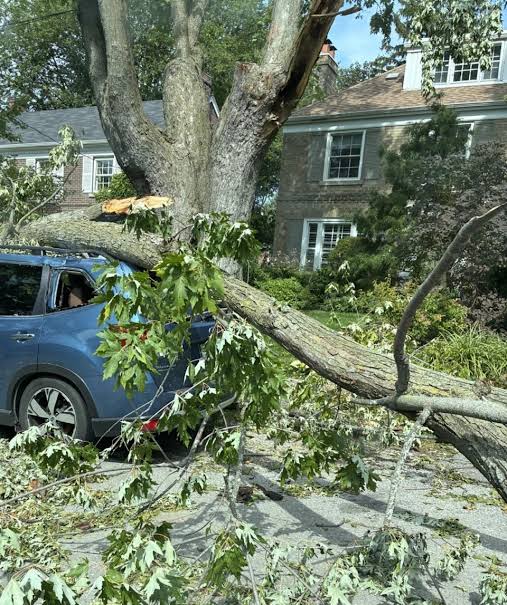
Saturated soil combined with strong winds brings down trees and branches, which can damage roofs, siding, fences, and vehicles. Structural damage from a fallen tree should always be assessed by a professional before repairs begin.
Even homes without full flooding often deal with water seeping in through smaller entry points. Left unaddressed, this type of water intrusion can lead to hidden moisture problems weeks later.
DESA Contracting & Restoration responds 24/7 across Toronto and the GTA to assess and address storm-related water damage.
Once the storm has passed, here’s the order that protects both your safety and your property:
Acting fast matters. As we cover in our guide on emergency water damage response, the first 24 to 48 hours after a flood largely determine how much secondary damage occurs.
Mold can begin developing within 24 to 48 hours of water exposure, which makes timing one of the most important factors in storm damage cleanup. The longer moisture sits, the more likely it is to spread beyond the original point of damage.
Our full breakdown of how Toronto water damage restoration services work walks through exactly what happens during a professional cleanup, from initial inspection through to drying and repairs.
Coverage for storm damage depends heavily on the cause, so it’s worth understanding the distinctions before you file.
Most standard home insurance policies in Ontario cover wind and hail damage, since these are considered sudden, accidental events.
Flooding from an outside source, like surface runoff during a flash flood, often requires a separate overland flood endorsement. Without it, this type of damage may not be covered.
Heavy rainfall can also overwhelm municipal sewer systems, leading to backups in some homes. If this happened to you, our guide on sewage backup in Toronto homes covers the causes, health risks, and cleanup process in detail.
For a full walkthrough of the claims process itself, see our guide on how to file a water damage insurance claim in Ontario, which applies whether your damage came from a storm, a burst pipe, or another source.
A professional assessment from DESA Contracting & Restoration supports your insurance claim from day one.
This depends on the extent of the damage. Minor water intrusion or roof repairs are often safe to stay home for, while significant flooding, structural damage, or electrical hazards usually mean it’s safer to relocate temporarily until repairs are complete. A professional, on-site assessment is always the most reliable way to know for sure.
As an IICRC-certified team, DESA Contracting & Restoration provides water damage restoration services built specifically for situations like this one. That includes fast extraction, structural drying, and documentation your insurance company can rely on.
We’re available 24/7 across Toronto and the GTA, because storm damage doesn’t wait for business hours, and neither do we.
No. Toronto experienced a severe thunderstorm and flash flooding on September 2, 2026. Confirmed tornadoes from the same weather system touched down in southwestern Ontario, including Tavistock, Wellesley, Monkton, Windsor, and Wheatley.
A cold front collided with a hot, humid air mass, creating powerful updrafts, heavy rain, hail, and destructive winds. The city recorded over 110 millimetres of rain in parts of Toronto within hours.
Check for immediate hazards, document the damage with photos and video, stop further water intrusion if it's safe to do so, and contact your insurance provider and a restoration professional promptly.
Wind and hail damage are usually covered under standard policies. Overland flooding and sewer backup often require separate coverage, so it's worth reviewing your policy before filing a claim.
Timelines vary based on severity. Minor cleanup can take a few days, while significant flooding or structural repairs may take one to several weeks.
Whether the September storm left you with a flooded basement, roof damage, or downed trees, waiting to act only makes cleanup harder. DESA Contracting & Restoration provides 24/7 emergency response, IICRC-certified assessments, and documentation that supports your insurance claim from the very first step. Contact DESA Contracting & Restoration today to get your home back to normal.
Our certified team is ready to help you recover, document, and rebuild after the storm.
Aurora, Bolton, Barrie, Brampton, Burlington, Caledon, Durham, East York, Etobicoke, Georgetown, Halton, King, Markham, Milton, Mississauga, North York, Oakville, Orangeville, Peel, Pickering, Richmond Hill, Scarborough, Thornhill, Toronto, Uxbridge, Vaughan and more.