
Researchers at Western University’s Northern Tornadoes Project have confirmed six tornadoes and three downbursts across southwestern Ontario from a storm system that moved through on September 2 and 3, 2026. Confirmed touchdown locations include Tavistock, Wellesley Township, Monkton, Windsor, and Wheatley, with an additional downburst confirmed in Seaforth.
If you’re researching tornado damage cleanup Ontario homeowners are dealing with after this event, it helps to understand a few things first: what actually happened, how tornado damage differs from flood damage, what to do immediately, and how insurance coverage typically works.
At DESA Contracting & Restoration, we help homeowners across the GTA recover from severe weather every year. While these specific tornado touchdowns occurred outside our core service area, the safety steps, insurance considerations, and cleanup process below apply broadly to anyone dealing with tornado or severe storm damage in Ontario.
According to the Northern Tornadoes Project, ground and drone surveys confirmed the following events from the September 2–3 storm system:
Researchers classify tornadoes and downbursts using the Enhanced Fujita Scale, which ranks severity based on wind speed and resulting damage. The scale runs from EF0, the lowest rating, up to EF5, the maximum. The Monkton tornado, for example, traveled nearly 5 kilometres with wind speeds around 150 km/h and a path roughly 50 metres wide.
Around the same time, Toronto experienced its own severe weather event: a thunderstorm the city called a “100-year storm,” bringing over 110 millimetres of rain and flash flooding. However, no tornado was confirmed within Toronto itself. For the full breakdown of that event, see our guide on storm damage cleanup in Toronto.
Tornado damage tends to look different from flood or storm-water damage, and recognizing the pattern helps homeowners and property owners know what to expect.
In the Monkton area, NTP surveys documented a partially destroyed farm building along with several destroyed grain bins. Similar structural failures are common wherever a tornado’s path crosses a building directly.
High wind speeds knock down trees, snap power poles, and scatter debris across wide paths. In Seaforth, the confirmed downburst caused damage to farm buildings, trees, and power poles across an area roughly 8.5 kilometres long.
Even outside the most severe damage paths, nearby structures often see broken windows, missing shingles, and partial roof loss from flying debris and sustained high winds.
Since several of the confirmed touchdowns occurred in agricultural areas, crop damage was widespread alongside structural losses, cutting a visible path through fields in the affected areas.
DESA Contracting & Restoration responds 24/7 to help homeowners assess and recover from severe weather damage.
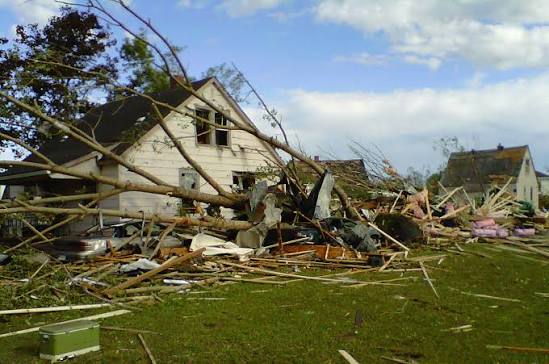
If a tornado or severe windstorm has affected your property, here’s the order that keeps you safe and protects your claim:
Not always, and that’s exactly why a professional structural assessment matters before cleanup starts. Cracked foundations, weakened framing, and compromised rooflines aren’t always visible from the outside. If you have any doubt about your home’s structural integrity, it’s safer to wait for a professional inspection than to assume everything’s fine.
In most cases, yes. Tornado and wind damage are generally treated as sudden, accidental events under standard Ontario home insurance policies, which typically means they’re covered.
Since tornadoes and high winds strike without warning, insurers generally classify the resulting damage as covered, similar to how a burst pipe is treated.
Insurers still expect clear documentation, including photos, video, and a professional assessment report. Our guide on how to file a water damage insurance claim in Ontario walks through the documentation and filing steps in detail, and the same principles apply whether your damage came from wind, water, or both.
A tornado that breaches a roof or window often lets rain in right behind it, turning wind damage into a water damage claim as well. If flooding or standing water becomes part of your situation, our guide on emergency water damage cleanup in Toronto covers how quickly you should act.
DESA Contracting & Restoration provides documented assessments that support your insurance claim from the start.
Timelines vary widely depending on severity. Debris removal and board-up can often happen within days, while full structural repairs, especially for collapsed outbuildings or major roof loss, can take several weeks to a few months.
How much does tornado damage repair cost also depends heavily on the extent of structural damage, so it’s difficult to estimate without a proper on-site assessment. Insurance approval speed plays a role too, which is another reason strong documentation matters from day one.
While the confirmed tornado sites from this event were outside the GTA, DESA Contracting & Restoration provides water damage restoration services across the Greater Toronto Area for homeowners dealing with wind, storm, or water damage from severe weather. Our certified team builds documentation into every assessment, which supports your insurance claim from the very first visit.
If you’re in the GTA and dealing with damage from a recent storm, we’re available 24/7 to help you get started on recovery.
Yes. Researchers confirmed six tornadoes and three downbursts across southwestern Ontario on September 2–3, 2026, ranging from EF0 to EF1 on the Enhanced Fujita Scale.
Confirmed touchdowns occurred in Tavistock, Wellesley Township, Monkton, Windsor, and Wheatley, with an additional downburst confirmed in Seaforth, all in southwestern Ontario.
Not always. Structural damage like cracked foundations or weakened framing isn't always visible. If there's any doubt, wait for a professional structural assessment before re-entering.
Generally yes. Tornado and wind damage are typically treated as sudden, accidental events under standard Ontario home insurance policies, though documentation is still required.
It depends on severity. Debris removal and board-up often take days, while major structural repairs can take several weeks to a few months.
Whether it’s wind, tornado, or flood damage, severe weather rarely gives much warning. DESA Contracting & Restoration provides 24/7 emergency response and documented assessments for homeowners across the GTA, so you’re never facing storm recovery alone. Contact DESA Contracting & Restoration today to get started.
Get a documented assessment from our certified restoration team.
Aurora, Bolton, Barrie, Brampton, Burlington, Caledon, Durham, East York, Etobicoke, Georgetown, Halton, King, Markham, Milton, Mississauga, North York, Oakville, Orangeville, Peel, Pickering, Richmond Hill, Scarborough, Thornhill, Toronto, Uxbridge, Vaughan and more.