
Toronto rainstorms are becoming more intense and frequent, overwhelming the city’s drainage systems and putting residential and commercial properties at significant risk. While many property owners look for obvious signs, such as ceiling stains or basement flooding, water damage after heavy rain often spreads quietly into areas that aren’t immediately visible.
At DESA Contracting, we regularly respond to calls where storm water damage was initially dismissed as “minor,” only to discover extensive hidden moisture days or weeks later.
Understanding what property owners often miss after rainstorms is key to protecting your building, preventing mold growth, and avoiding costly repairs.
Toronto’s infrastructure and climate create ideal conditions for storm water damage:
When rain falls faster than the ground and drainage systems can absorb it, water looks for the path of least resistance—often into buildings.
This is why water damage after rainstorms is one of the most common restoration issues across the GTA.
Many property owners assume rainwater only enters through obvious roof leaks. In reality, storm water intrusion can occur in multiple ways:
Wind-driven rain can lift shingles, penetrate flashing, or force water beneath roofing membranes. Water may then travel along beams before appearing inside.
Heavy rain saturates soil around foundations, increasing hydrostatic pressure. Water pushes through:
Basements are one of the most common locations for water damage after heavy rain in Toronto.
Failing caulking, aging seals, or improper installation allows rainwater to seep behind walls—often without immediate visible signs.
Improper grading or clogged downspouts can funnel rainwater directly toward the foundation.
The most dangerous storm damage is what you don’t see.
Once rainwater enters wall cavities, it can soak insulation, wiring, and framing. Drywall may appear unaffected while moisture spreads internally.
Water can migrate beneath laminate, hardwood, or tile, leading to warping, mold growth, and subfloor deterioration.
Rainwater may pool in insulation or ceiling cavities before any staining appears.
In commercial buildings, rainstorm water damage can spread through:
This hidden damage often leads to business interruption if not addressed quickly.
Toronto’s ageing infrastructure plays a significant role in why water damage after heavy rainstorms is becoming increasingly common across the city and the GTA. Many residential and commercial properties are connected to combined sewer systems that struggle to handle large volumes of stormwater during intense rainfall. When these systems are overwhelmed, water can back up into basements, floor drains, and plumbing systems—often without warning.
In older Toronto neighbourhoods, foundations were built using materials and construction standards that were not designed to withstand today’s extreme weather patterns. Hairline foundation cracks, deteriorating mortar, and aging window wells allow rainwater to seep into buildings during prolonged or heavy storms. Once water enters, it can spread through wall cavities, insulation, and subflooring, leading to hidden water damage after rain in Toronto that may not surface for days or even weeks.
Urban density also contributes to storm water damage. With limited green space and a high percentage of paved surfaces, rainwater has fewer natural places to drain. Instead, it pools around buildings and forces its way inside through the weakest points. This is especially problematic for properties with flat roofs, underground parking garages, or shared walls, where rainstorm water damage in GTA properties can migrate between units or floors.
Due to these infrastructure challenges, property owners in Toronto and the surrounding GTA communities should consider water damage after rainstorms a serious risk, even when no immediate flooding is visible. Professional water damage restoration in Toronto ensures moisture is detected early and prevents small issues from escalating into major structural or mould problems.
Knowing the signs of water damage after heavy rainstorms can help property owners act early:
If you notice any of these after a storm, professional water damage cleanup in Toronto is strongly recommended.
Water damage is progressive. The more prolonged the moisture remains, the more severe the damage becomes.
This is why emergency water damage restoration in Toronto is critical after heavy rain.
Property owners can perform a basic inspection after rainstorms:
However, many forms of hidden water damage after rain in Toronto require professional moisture detection tools.
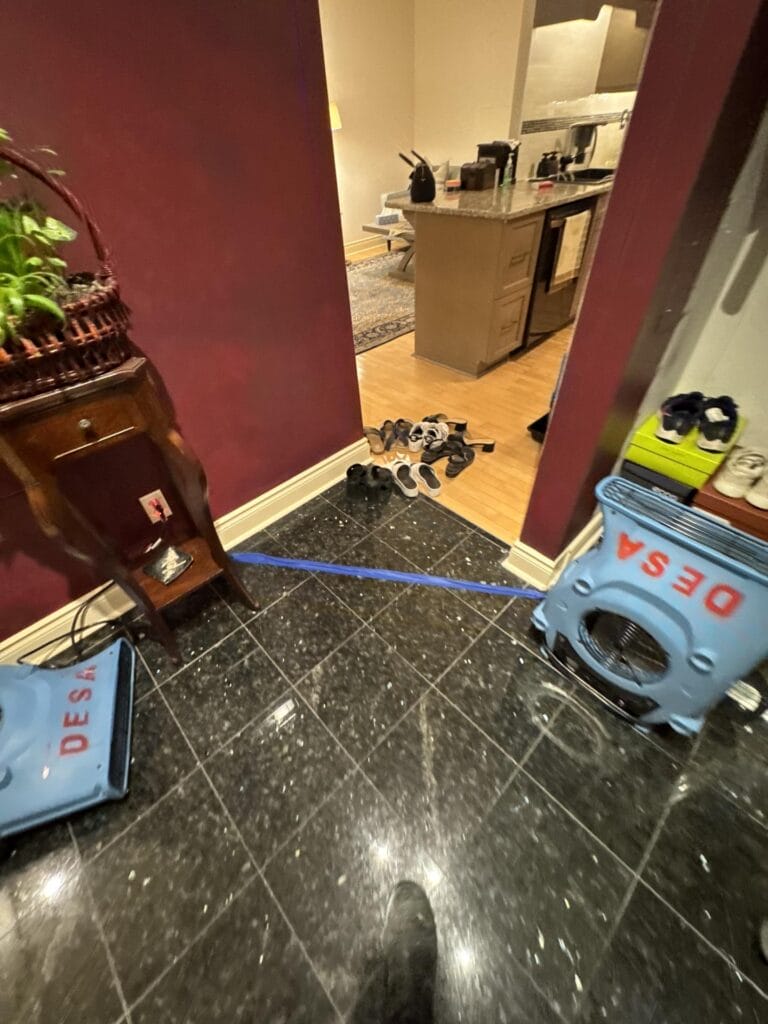
DIY drying methods remove surface moisture but rarely address what’s trapped behind walls or under floors. At DESA Contracting, our water damage restoration in Toronto process includes:
This comprehensive approach protects both the structure and indoor air quality.
Learn more on our Water Damage Restoration Services page.
Common signs include ceiling stains, musty odours, peeling paint, warped flooring, damp basements, and unexplained increases in humidity. In Toronto properties, water damage may also appear days after the rain, especially behind walls or under floors. If any unusual changes occur after a storm, it’s important to investigate quickly before mould or structural damage develops.
Rainwater can enter through damaged roofs, foundation cracks, window seals, exterior walls, or overwhelmed drainage systems. Wind-driven rain is especially problematic, as it forces water into areas that usually remain dry. Basements are particularly vulnerable due to soil saturation and hydrostatic pressure that can occur after heavy rain.
Hidden water damage allows moisture to remain trapped in walls, insulation, and flooring, creating ideal conditions for mould growth and material deterioration. Because the damage isn’t immediately visible, property owners often delay action, which significantly increases repair costs and health risks. Professional detection is key to identifying these hidden issues.
You should contact a restoration professional as soon as possible—ideally within 24 hours. Early response limits moisture spread, reduces mold risk, and lowers overall repair costs. DESA Contracting offers emergency water damage restoration across Toronto and the GTA to address storm damage quickly.
Coverage depends on the source of the water. Sudden internal leaks or roof failures are often covered, while groundwater flooding may require a separate flood insurance policy. Prompt documentation and professional restoration help support insurance claims and protect coverage.
Heavy rainstorms can cause far more damage than what’s visible on the surface. At DESA Contracting, we provide fast, reliable water damage cleanup in Toronto and the GTA, identifying hidden moisture and restoring properties safely and thoroughly.
If your property was affected by recent rainstorms, don’t wait for mold or structural issues to appear.
Contact DESA Contracting today for emergency water damage restoration and professional inspection.
Aurora, Bolton, Barrie, Brampton, Burlington, Caledon, Durham, East York, Etobicoke, Georgetown, Halton, King, Markham, Milton, Mississauga, North York, Oakville, Orangeville, Peel, Pickering, Richmond Hill, Scarborough, Thornhill, Toronto, Uxbridge, Vaughan and more.